Film & Television in Starnberg: Lake, Location, Cinema
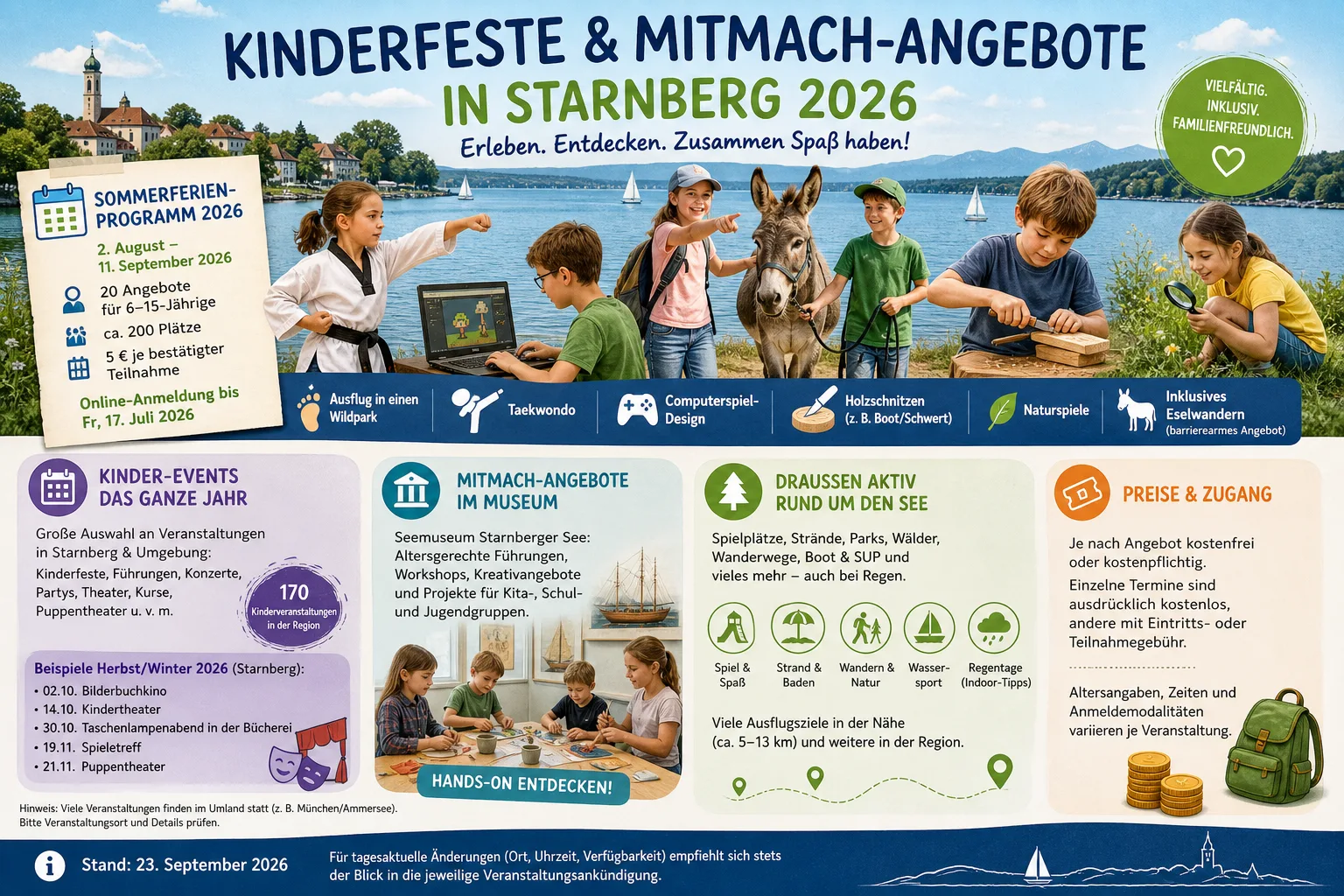
Film & Television made in Starnberg: What will be coming to the screen at the lake in the coming years
Outlook on planned formats, expected trends, and future opportunities for shoots, cinema events, and youth work in the Five Lakes Region.
Target group: Visitors, cultural professionals, potential film crews, and everyone who wants to experience Starnberg as a film and cinema location in the future.
Open-air cinema by the water: What experiences are possible in the next seasons
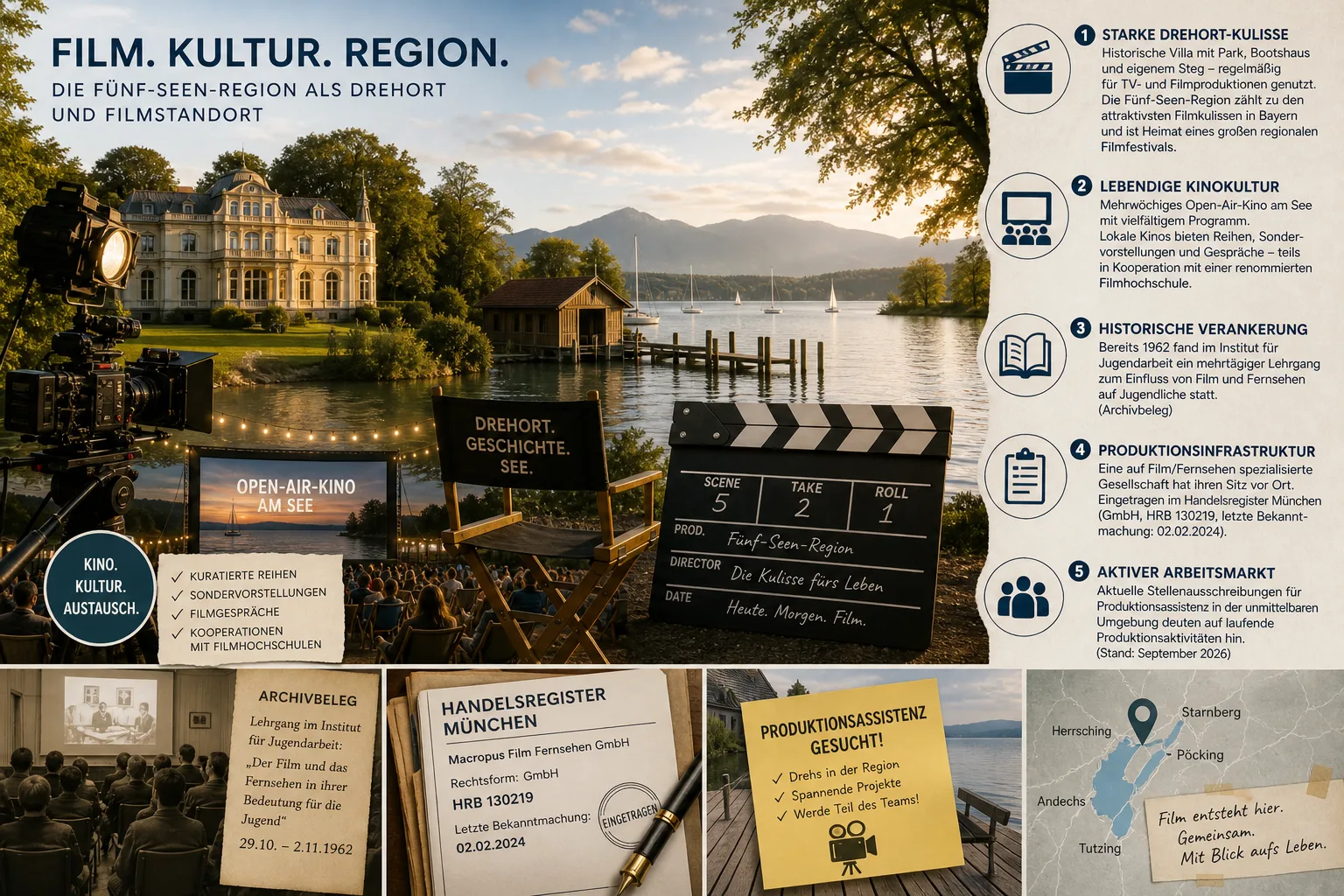
In the coming summer seasons, open-air cinema will likely be conceived even more as a curated overall experience: not just a film screening, but an evening dramaturgy with discussion, introduction, themed series, or musical framework. The combination of screen images and lake atmosphere is particularly attractive.
For a future open-air program in Starnberg, these components are particularly plausible and effective with audiences:
- Themed weeks (e.g. “Europe in Cinema”, “Strong Documentaries”, “Literary Adaptations”).
- Post-film discussions with filmmakers, moderators, or experts from culture and media education.
- More accessible offerings (e.g. selected screenings with subtitles, clear information about accessibility in advance).
- Family and youth evenings that deliberately start early and are framed appropriately in terms of content.
For visitors, this means in the future: Those who visit Starnberg in the summer can most likely not only experience nature, but also a form of cinema that puts community and conversation back at the center.
Festival impulses in the Five Lakes Region: What can strengthen Starnberg in the future
A regional festival ecosystem can particularly advance Starnberg in the coming years if it consistently focuses on profile: clear program lines, visible cooperations, and formats that reach both professionals and locals.
For Starnberg to act as a strong hub within a festival landscape in the future, the following steps are especially realistic and sensible:
- Clear venues and routes: well-communicated routes between screening locations, gastronomy, and lakeshore areas.
- Workshop formats (pitching, masterclasses, case studies) with a limited number of participants and real working intensity.
- Local integration through sponsorships, host programs, or moderated encounters between team and audience.
- Reliable young talent tracks (school program, youth jury, short film window) that recur every year and can be reliably planned.
This way, Starnberg can in the future not only be a “beautiful backdrop”, but a place where film culture becomes regularly visible: in discussions, formats, encounters, and skills development.
Media education & young talent: Which formats will be particularly effective in the future
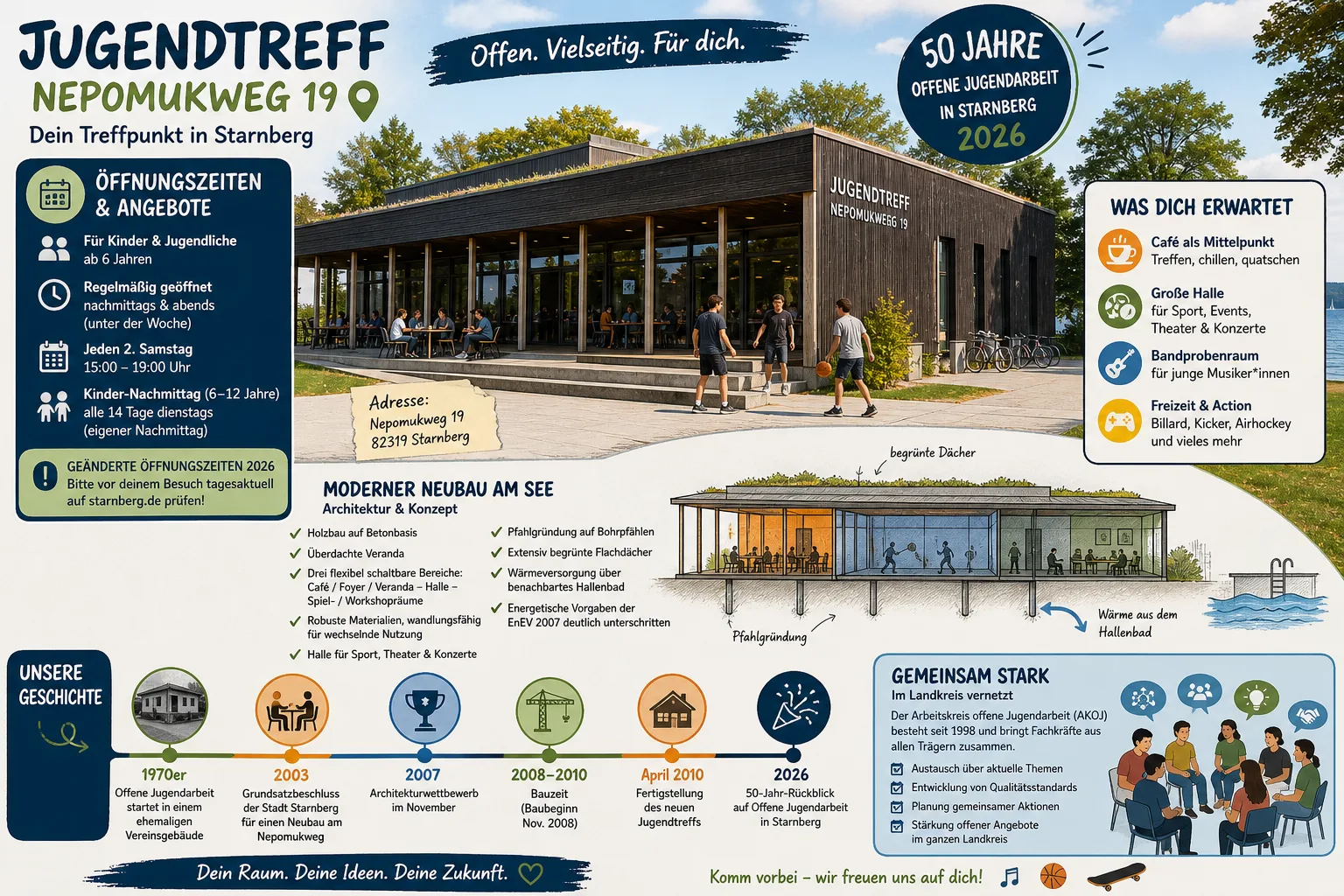
Because moving images will continue to gain importance for children and young people in the future, those offerings in Starnberg will be particularly effective that combine practice and reflection: filming, editing, storytelling themselves – and at the same time learning how visual language, algorithms, advertising, and disinformation work.
Formats recommended for the coming years
- Short film labs for schools and youth groups (idea → shoot → edit → premiere).
- Parent evenings and teacher workshops on youth media protection, usage times, and conversation management.
- Mentoring by professionals (camera, sound, editing, production) with small, realistic projects.
- “Critical viewing” series, in which selected films or series episodes are analyzed (dramaturgy, representation, stereotypes, fact-checking).
What will be crucial for trust and quality in the future: clear responsibilities, transparent rules for image rights and data protection, and an educational framework that protects children and at the same time takes them seriously.
Production & economy: Which effects are realistic in the future
In the coming years, film and television production in Starnberg can grow primarily as a quiet location factor: not necessarily through huge studio buildings, but through services, coordination, locations, accommodation, transport, catering, and local trades. The more plannable shoots are, the more local businesses benefit.
In the future, these effects are particularly realistic:
- More short-term orders for hotels, gastronomy, and mobility when shoots or screening series take place.
- Professionalization of local service providers who specialize in production needs (e.g. technical logistics, location support).
- More moving images for regional companies (recruiting videos, image films, social clips) thanks to growing local expertise.
If a region not only allows shoots but also supports them in a structured way, a cycle of planning security, recurring orders, and growing creative competence emerges.
Sustainable shoots in a sensitive lake landscape: What should become standard in the future
Especially in a landscape with water, shore zones, and natural areas, sustainable production will no longer be “nice to have” but a quality criterion in the future. In the coming years, clients, funding bodies, and broadcasters/platforms will likely pay even more attention to how productions minimize emissions, waste, and interventions.
Practical standards that could become established in the future
- Mobility concepts with short distances, carpooling, and efficient transport planning.
- Resource-saving set organization (reusable items, clear waste separation, digital scheduling instead of piles of paper).
- Careful handling of shore and green areas through defined walkways, protective mats, and clear zone planning.
- Transparent communication with residents (times, noise, accessibility) to ensure long-term acceptance.
This way, Starnberg can be a place in the future where high-quality images are created without the landscape having to “pay” for it.