Social Projects in Starnberg: Engagement & Volunteering
Social Projects & Initiatives That Will Shape Starnberg in the Future
Anyone who wants to make a difference in Starnberg and the district in the coming weeks and months will find several ways to do so: donate time (volunteering), use money in a targeted way (community foundation, crowdfunding), or actively help shape participation (e.g., inclusive leisure activities). This overview shows which forms of engagement are likely to be particularly in demand, how to recognize reputable contact points, and how to make your entry into volunteering manageable.
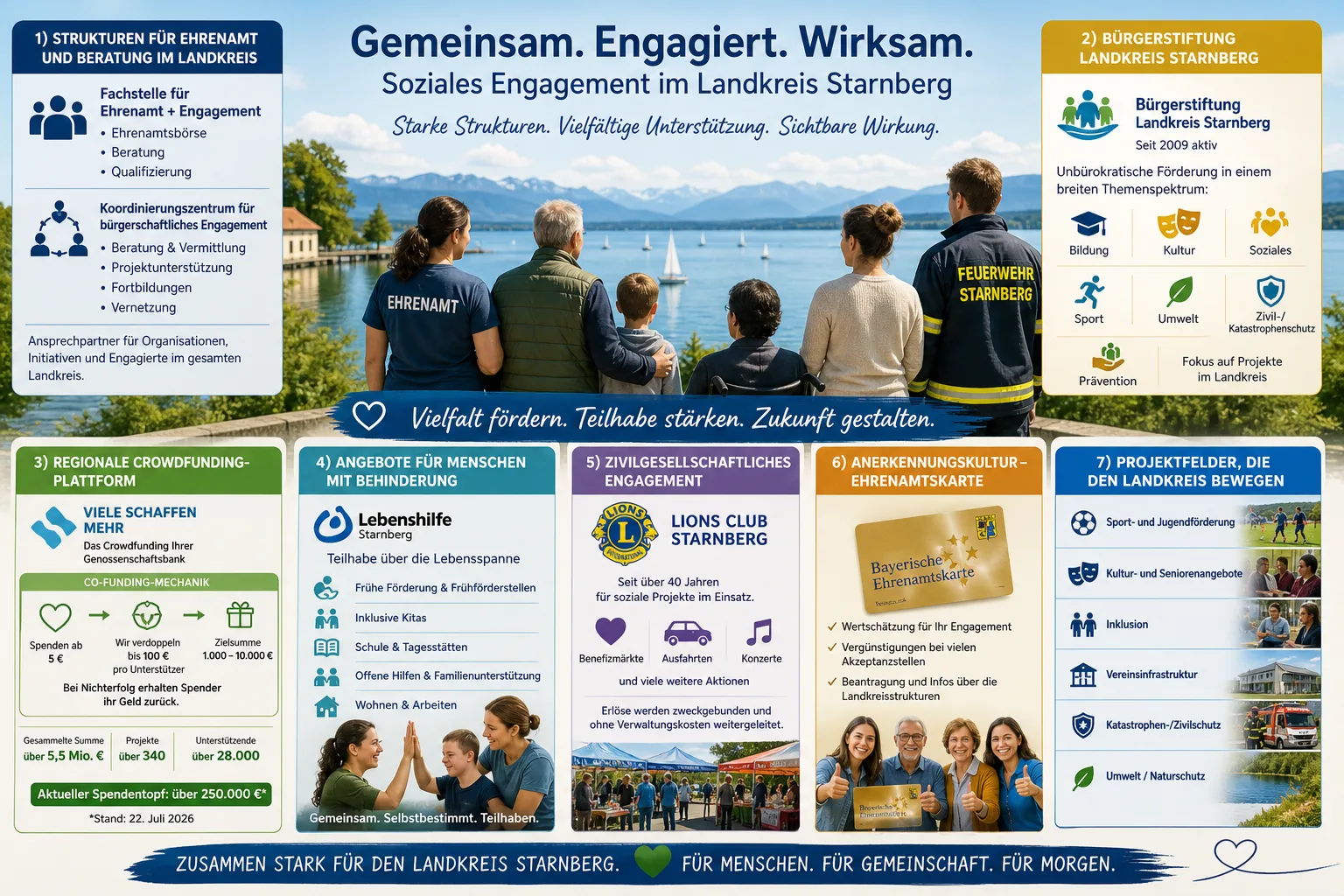
Structures for Volunteering: How to Find Your Role
If you want to get involved soon, a structured entry is worthwhile: In municipalities and districts, engagement opportunities are typically bundled (e.g., through volunteer coordination, engagement counseling, or a volunteer exchange). This helps you find a suitable task profile more quickly and avoid overwhelm.
What to Look for in Contact Points
- Suitability instead of "anything": Good placement asks about your time budget, interests, resilience, language skills, and previous experience.
- Clear roles & contacts: Reputable organizations specify responsibilities (induction, substitution, feedback).
- Qualification: For more demanding tasks (e.g., visiting services, accompanying children, working with vulnerable groups), induction and further training are standard.
- Protection concepts: For activities with children/youth or vulnerable people, prevention, data protection, and boundaries are part of the preparation.
For Starnberg, this means in practice: Plan a short orientation talk (by phone or on site) as your first step. Afterwards, you can choose a trial "taster" activity in the coming weeks (e.g., a one-off assignment at an event) and only then move into a regular volunteer role.
Funding: How Projects in Starnberg Are Financed
Many social initiatives in the near future will not fail due to lack of ideas, but due to reliable financing. This is where foundations and local funding instruments come in: They support projects that strengthen participation, prevent loneliness, increase educational opportunities, or stabilize neighborhoods and communities.
Which Projects Are Likely to Have Good Funding Prospects
- Education & youth: Learning support, mentoring, low-threshold leisure activities, media literacy.
- Senior work: Visiting and support services, meeting formats, support networks against loneliness.
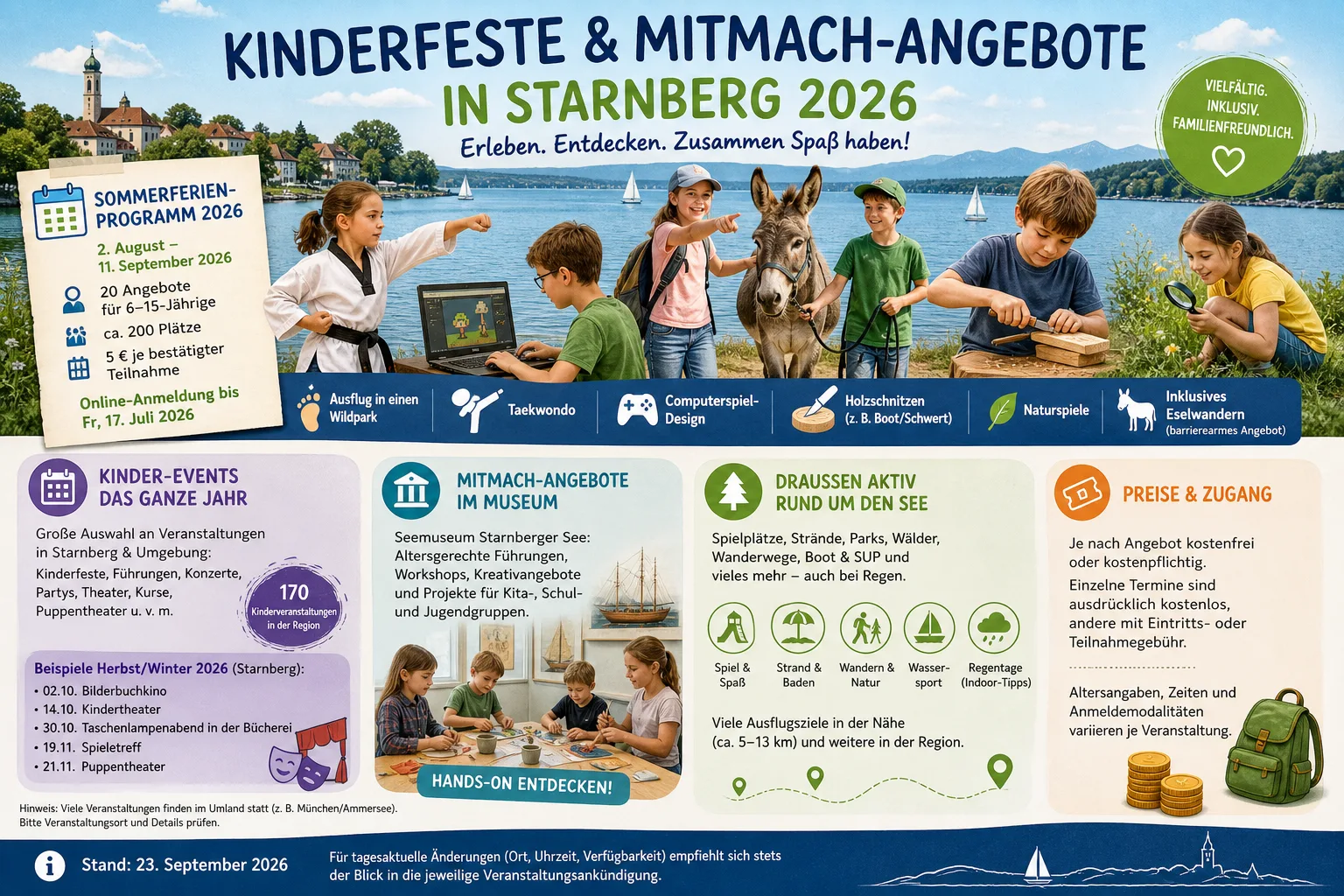
- Inclusion: Low-barrier offers in sports, culture, and everyday life, support for leisure activities.
- Health-related prevention (non-medical): Exercise and meeting opportunities that reduce social isolation.
- Environment & common good: Participation campaigns, environmental education, intergenerational projects in public spaces.
How to Prepare a Funding Application Well in the Coming Weeks
- Target group & benefit: Who specifically benefits, and what change is realistically achievable within the project period?
- Plan & responsibility: Who does what, when, how often?
- Budget: List understandable items (materials, room rental, insurance, travel expenses, public relations) without overestimating.
- Impact check: Define simple measurement points (number of participants, households reached, regular appointments, feedback).
Important: Funding rarely replaces the responsibility for safe procedures. If you want to work with children, young people, or particularly vulnerable people, your project should take data protection, supervision, and clear boundaries into account from the outset.
Regional Crowdfunding: Enabling a Lot in a Short Time
If you want to quickly raise money for a clearly defined project in the coming months (e.g., equipment, low-barrier renovation, materials for an inclusive offer), crowdfunding is often more suitable than a lengthy funding process. Projects that have a visible result and whose benefits are locally tangible work particularly well.
This Is How Crowdfunding Becomes Convincing in Practice in Starnberg
- Concrete purpose: "10 new swimming aids", "mobile ramp", "materials for theater workshop" works better than "Support us".
- Transparency: Explain how every euro will be used and how you will report after completion.
- Short period: A clearly limited duration creates commitment.
- Activate the community: Ask clubs, parent councils, neighborhoods, and local businesses for reach.
Many regional crowdfunding offers work with co-funding mechanisms (e.g., grants or matching up to certain limits). Check the respective conditions, deadlines, and payout rules directly on the platform before you launch your project.
Participation & Inclusion: Engagement With and For People With Disabilities
In the coming months, inclusive offers will have the greatest impact when they are designed not "for" but "with" people with disabilities: low-barrier, reliable, respectful, and with clear communication. This creates meaningful tasks for volunteers that are easy to plan and enable real encounters.
Typical Areas of Activity That Will Be Suitable in the Future
- Leisure support: Assistance with sports, culture, excursions, or club activities.
- Relief for families: Creating time slots so that relatives can keep appointments or recover.
- Support with mobility: Accompanying on routes (e.g., to appointments or events), provided it is organizationally secured.
- Co-designing low-barrier offers: Help with organization, communication, materials, setup/takedown.
Reputable providers and associations clarify in advance which tasks you can take on, what boundaries apply, and how you will receive support. This is not a "bureaucratic obstacle" but the basis for safety and trust.
Civic Engagement: From Events to Visiting Services
If you can only get involved occasionally, time-limited actions are a good option: helping at benefit events, charity runs, cultural formats, collection campaigns, or community participation days. Such assignments can often be scheduled at short notice and are a good way to get to know organizations.
If you want to get involved for a longer period, you can be particularly effective in areas where reliability counts in the coming months:
- Visiting services & conversation offers: Regular time, listening, small everyday support within clear rules.
- Mentoring & sponsorships: Accompanying children/young people or people in transition situations (with qualification).
- Club work: Training operations, driving services, organization, communication, member support.
The following applies to all forms: Good initiatives plan your role so that you do not feel left alone—with fixed contacts, induction, and a clear task description.
How to Get Started in Starnberg in the Next 30 Days
- Choose a time budget: Decide whether you want to help once, monthly, or weekly.
- Decide on a topic: Youth, seniors, inclusion, environment, culture, integration, or neighborhood.
- Contact a central placement service or an organization: Arrange a short orientation meeting and ask about induction and framework conditions.
- Start with a manageable assignment: A trial appointment or an action will quickly show you if it fits.
- Make commitment easy: If you stay, clarify rhythm, substitution, communication channels, and boundaries in writing or at least clearly.
- If you want to give money: Use a transparent donation or crowdfunding solution for the next project and pay attention to earmarking and receipt/proof.