
Franz (Pommern)
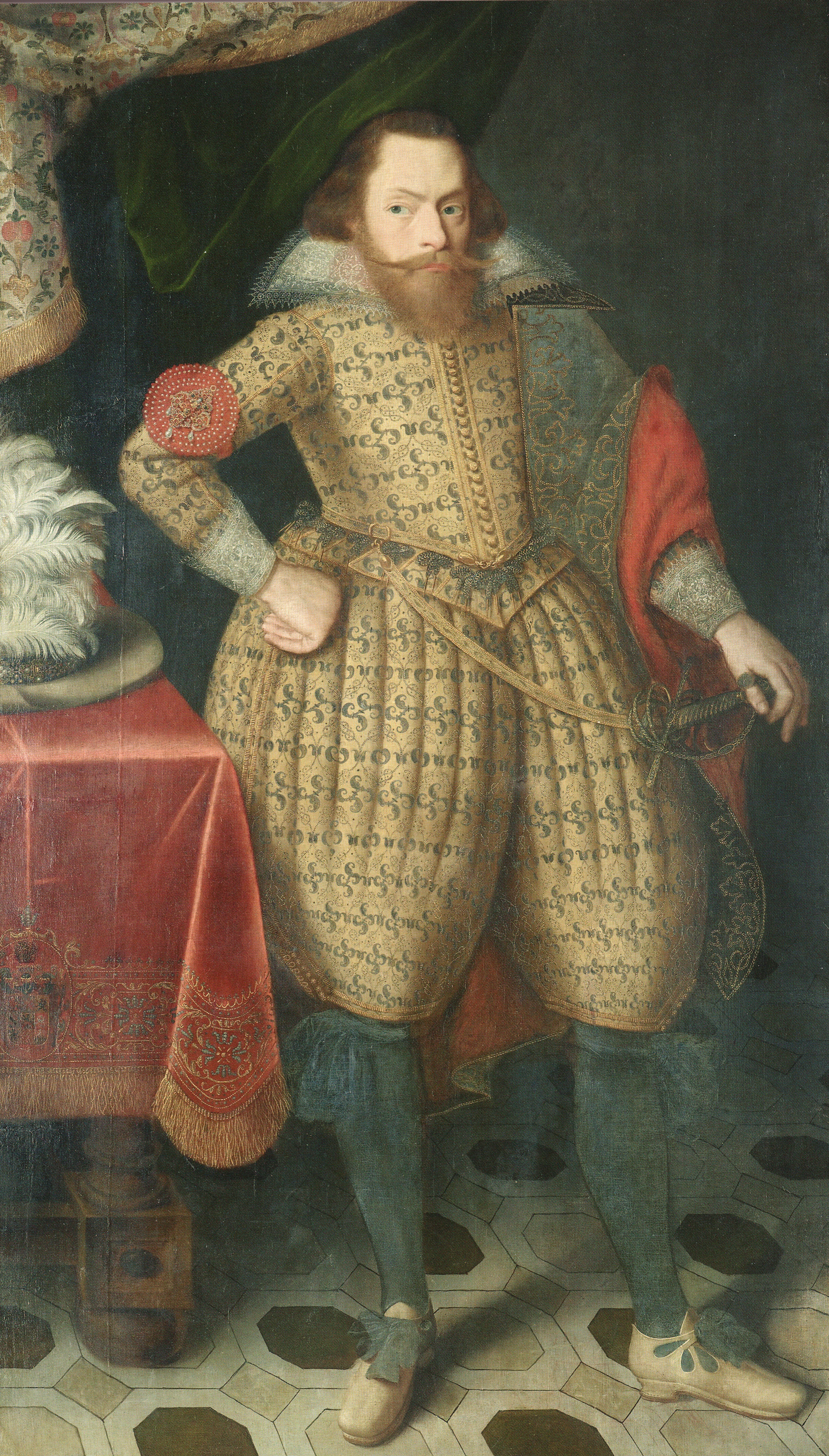
Image from Wikipedia
Image from Wikipedia
Franz von Pommern – the last great Duke of Pomerania-Stettin
A Prince between Power, Education, and the Transformation of the Early 17th Century
Franz von Pommern is one of the significant figures of the Pomeranian late Middle Ages and the Early Modern period, even though he was not a musician or an artist in the strict sense. Born on March 24, 1577, in Barth and died on November 27, 1620, in Stettin, he served as Duke of Pomerania-Stettin and Bishop of Cammin during a time when dynastic order, ecclesiastical offices, and military matters were closely intertwined. His biography interweaves courtly education, political responsibility, and a noticeable proximity to the power issues of his time. ([de.wikipedia.org](https://de.wikipedia.org/wiki/Franz_%28Pommern%29))
Origin and Early Influences
Franz was the son of Duke Bogislaw XIII and his first wife, Klara of Brunswick-Lüneburg. His father ensured a comprehensive education, and early on, it became evident that Franz was particularly interested in chivalry and military affairs. However, the plan to go to the Saxon court was thwarted by Johann Friedrich, who instead brought Franz to the Diocese of Cammin. This began a career that led him not only into ecclesiastical but also state-political responsibilities. ([de.wikipedia.org](https://de.wikipedia.org/wiki/Franz_%28Pommern%29))
At a young age, Franz thus found himself at the crossroads of a religious career and secular power. In 1592, he was appointed as coadjutor of the diocese, and in 1593, he participated in the national synod. This early integration into ecclesiastical and political structures shows how consistently his path was prepared. His education and his first public role made him a figure perceived early on as a future decision-maker within the House of Pomerania. ([de.wikipedia.org](https://de.wikipedia.org/wiki/Franz_%28Pommern%29))
Travel, Military Experience, and European Impressions
Franz did not limit himself to Pomeranian domestic politics. In 1594, a journey took him to Vienna and Hungary, where he participated in the siege of the fortress of Gran under the later Archduke Matthias. He then traveled to Italy and returned to Pomerania in 1596. These stops familiarized him with the significant political and military arenas of Central Europe and sharpened his view of courtly representation as well as military reality. ([de.wikipedia.org](https://de.wikipedia.org/wiki/Franz_%28Pommern%29))
In 1607, he undertook another extensive journey, leading him through Prague, Switzerland, and France to the border of Spain. The return trip went through England, Scotland, and the Netherlands. Such ventures were more than merely courtly educational tours: they provided Franz with insights into forms of governance, diplomacy, and European interconnections. For a type of ruler later occupied with administrative matters and territorial defense, these experiences formed an important background. ([de.wikipedia.org](https://de.wikipedia.org/wiki/Franz_%28Pommern%29))
From the Bishop of Cammin to the Duke of Pomerania-Stettin
After his uncle Kazimir relinquished the Diocese of Cammin, Franz was instituted as bishop in 1602 following an election in the cathedral of Cammin. His residence was in Köslin, where he had the castle appropriately furnished. In 1604, the King of Sweden offered him the command of 1,000 cavalry and 3,000 foot soldiers in the Swedish-Polish War, but Franz declined, considering the neutrality of Pomerania. This decision demonstrates his political pragmatism and his understanding of the limits of territorial power. ([de.wikipedia.org](https://de.wikipedia.org/wiki/Franz_%28Pommern%29))
In 1614, he organized a small military force to secure the borders of his diocese. When his brother Philipp II died without heirs in 1618, Franz succeeded him in governing Pomerania-Stettin, while the office of Bishop of Cammin passed to his brother Ulrich. With this step, Franz firmly ascended to the forefront of Pomeranian rule. His tenure coincided with a time of increasing tensions, where defense issues, administration, and dynastic continuity were closely interlinked. ([de.wikipedia.org](https://de.wikipedia.org/wiki/Franz_%28Pommern%29))
Government Style, Administration, and Public Perception
Franz devoted himself intensively to government affairs and the city of Stettin. He always had documents thoroughly examined, indicating a careful and controlled governance style. At the same time, due to his amiable and kind nature, he was regarded as very popular among the people. This combination of thoroughness, personal accessibility, and a strong sense of duty profoundly shaped his public image. ([de.wikipedia.org](https://de.wikipedia.org/wiki/Franz_%28Pommern%29))
Less strongly than his predecessor Philipp II, Franz supported scholarly interests. Works on geographical or regional historical topics, including the Pomeranographia by Valentin von Winther, received only minimal support from him. His priorities clearly lay in political control, military security, and the concrete administration of the land. In this respect, he exemplifies a ruler who did not center on a learned court but rather on direct governmental work. ([de.wikipedia.org](https://de.wikipedia.org/wiki/Franz_%28Pommern%29))
Conflicts, Witch Trials, and the End of a Dynastic Era
During Franz’s tenure, the witch trial against the 70-year-old Sidonia von Borcke from the Marienfließ Monastery occurred. She was accused of causing the early deaths of Dukes Philipp II and Georg as well as the childlessness of the other sons of Bogislaw XIII through witchcraft. On September 1, 1620, she was sentenced to death and executed at the end of the month. The case illustrates the dark intellectual atmosphere of the time, where politics, superstition, and dynastic crises were closely intertwined. ([de.wikipedia.org](https://de.wikipedia.org/wiki/Franz_%28Pommern%29))
Less than two months later, Franz fell ill after lunch, although he had been healthy that morning, and died a few days later. His marriage to Sophie of Saxony in 1610 remained childless. With his death, not only did a personal chapter end, but also another section in the history of the Pomeranian dukes, whose rule was shortly thereafter subjected to the profound upheavals of the Thirty Years' War. ([de.wikipedia.org](https://de.wikipedia.org/wiki/Franz_%28Pommern%29))
Context and Cultural Resonance
Franz von Pommern continues to fascinate today as a historical key figure between ecclesiastical office, secular authority, and European mobility. His biography tells the story of a time when education, military experience, and dynastic politics were inseparably linked. Those interested in the history of Pomerania, early modern rulers’ biographies, and the mechanisms of power in smaller territories will find in Franz a multifaceted personality with clear contours. ([de.wikipedia.org](https://de.wikipedia.org/wiki/Franz_%28Pommern%29))
His profile is particularly compelling because it cannot be reduced to great battles or spectacular reforms. Instead, Franz exemplifies the subtle, often overlooked governance work of a territorial ruler navigating between representation, loyalty, confession, and defense. This very mix makes him a historically significant figure in Pomeranian history. ([de.wikipedia.org](https://de.wikipedia.org/wiki/Franz_%28Pommern%29))
Conclusion: Why Franz von Pommern Remains of Interest Today
Franz von Pommern represents a ruler whose life path reflects the transition from late medieval princely culture to early modern state consolidation. His career connects the diocese, duchy, court travel, military service, and administration into an impressive political life portrait. Those interested in substantial historical biographies should keep an eye on Franz as a formative figure of old Pomerania. ([de.wikipedia.org](https://de.wikipedia.org/wiki/Franz_%28Pommern%29))
Official Channels of Franz (Pomerania):
- Instagram: no official profile found
- Facebook: no official profile found
- YouTube: no official profile found
- Spotify: no official profile found
- TikTok: no official profile found
Sources:
- Wikipedia – Franz (Pommern) ([de.wikipedia.org](https://de.wikipedia.org/wiki/Franz_%28Pommern%29))
- Ruwiki – Franz von Pommern ([ru.ruwiki.ru](https://ru.ruwiki.ru/wiki/%D0%A4%D1%80%D0%B0%D0%BD%D1%86_%D0%9F%D0%BE%D0%BC%D0%B5%D1%80%D0%B0%D0%BD%D1%81%D0%BA%D0%B8%D0%B9?utm_source=openai))
- DeWiki – Franz (Pommern) ([dewiki.de](https://dewiki.de/Lexikon/Franz_%28Pommern%29?utm_source=openai))
- Rügenwalde.com – Franz ([de.wikipedia.org](https://de.wikipedia.org/wiki/Franz_%28Pommern%29))
- Wikipedia: Image and text source ([de.wikipedia.org](https://de.wikipedia.org/wiki/Franz_%28Pommern%29))