
Peter Shaffer
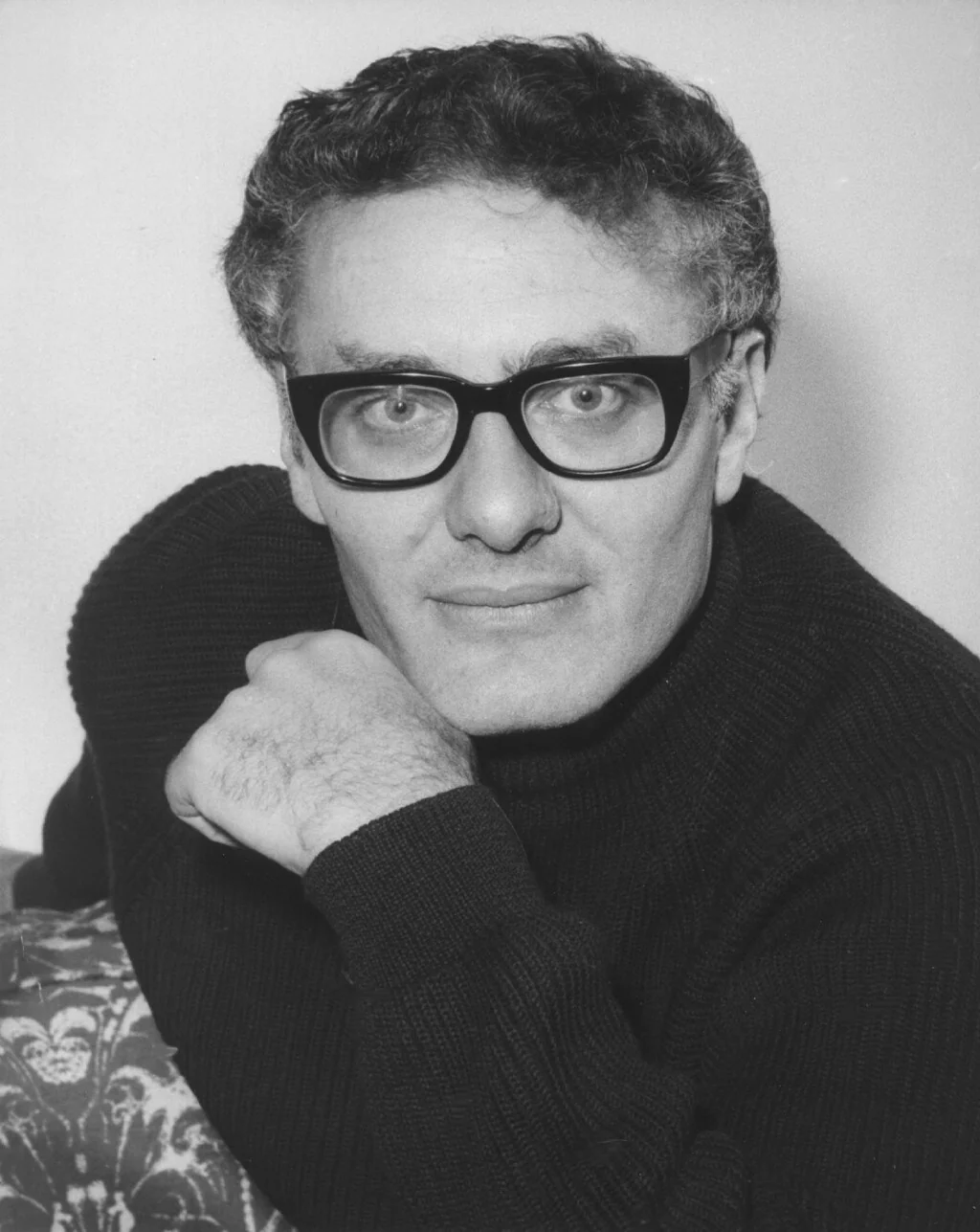
Image from Wikipedia
Image from Wikipedia
Peter Shaffer – the playwright who condensed music, power, and human abysses into world-class classics
A British playwright bridging musical passion and dramatic precision
Peter Shaffer was one of the great theater authors of the 20th century: an English playwright, screenwriter, and novelist, born on May 15, 1926, in Liverpool and passed away on June 6, 2016, in County Cork. His work combines psychological tension, formal elegance, and a distinct sensitivity to music, rituals, and human obsessions. With Amadeus, he created a piece that became a cultural reference far beyond the theater. ([en.wikipedia.org](https://en.wikipedia.org/wiki/Peter_Shaffer?utm_source=openai))
Shaffer's career exemplifies an author who understood theater as a vast resonance space: for language, conflict, irony, and emotional intensity. His plays move between farce, historical representation, chamber play, and tragic insights. This is particularly evident in works like Five Finger Exercise, The Royal Hunt of the Sun, Equus, and Amadeus, which made him internationally renowned and significantly shaped the discourse on modern British theater. ([encyclopedia.com](https://www.encyclopedia.com/arts/culture-magazines/shaffer-peter-1926?utm_source=openai))
Early Years: Education, initial writings, and the path to the stage
Shaffer studied at Cambridge and initially worked as a book reviewer and in other positions before fully dedicating himself to writing. His first dramatic works emerged during a period when British theater sought new forms and audiences became increasingly open to psychologically nuanced conflicts. Early on, he demonstrated the ability to connect familial tensions, moral dilemmas, and a clear, theatrical structure. ([pasadenaplayhouse.org](https://www.pasadenaplayhouse.org/wp-content/uploads/2025/11/AMADEUS_Full-Casting-Release_Pasadena-Playhouse_Press-Release.pdf?utm_source=openai))
The early years mark not merely a precursor for Shaffer but the emergence of a distinctive style. His plays rely on contrasts, precise dialogues, and a strong scenic economy that transforms small constellations into profound questions. This very tension later made his works so attractive for film and international theaters. ([theguardian.com](https://www.theguardian.com/stage/2016/jun/06/peter-shaffer-elaborate-theatre-he-succeeded-equus-amadeus?utm_source=openai))
The breakthrough with Five Finger Exercise and the rise to international recognition
The decisive breakthrough came with Five Finger Exercise in 1958. The play instantly showcased Shaffer as an author who brought familial dynamics to the stage with psychological sharpness and dramatic precision. Awards followed quickly: the work was honored with the Evening Standard Drama Award and the New York Drama Critics Circle Award, laying the foundation for his reputation as a significant new voice in theater. ([encyclopedia.com](https://www.encyclopedia.com/arts/culture-magazines/shaffer-peter-1926?utm_source=openai))
In the 1960s, Shaffer greatly expanded his stylistic range. The Royal Hunt of the Sun and Black Comedy demonstrated how adeptly he could switch between historical monumentality and comedic play. This breadth made him an author whose works focused not only on text but on the entire stage: on space, movement, rhythm, and the impact of a precisely placed moment. ([encyclopedia.com](https://www.encyclopedia.com/religion/encyclopedias-almanacs-transcripts-and-maps/shaffer-sir-peter?utm_source=openai))
Equus: Drama as a psychological burning mirror
Equus from 1973 is considered one of Shaffer's strongest plays and a key work of modern English theater. The drama won the Tony Award for Best Play and additionally received the New York Drama Critics' Circle Award. Its celebrated connection of ritual, symbolism, and psychological intensity made the play a notable event on stage. ([encyclopedia.com](https://www.encyclopedia.com/arts/culture-magazines/shaffer-peter-1926?utm_source=openai))
What makes Equus enduring is how Shaffer translates inner conflict into an almost physical stage experience. The language, the physicality of the scenes, and the emotional radicality of the constellation showcase a dramatist at the peak of his expressive power. That the play was also regarded as innovative in its reception confirms its status as a theatrical classic. ([encyclopedia.com](https://www.encyclopedia.com/literature-and-arts/performing-arts/theater/equus?utm_source=openai))
Amadeus: Music, genius, and envy as a worldwide success
With Amadeus, Shaffer reached the greatest cultural reach of his career. The play, premiered in 1979 at the National Theatre in London, does not depict a simple historical narrative but rather a psychological chamber play about envy, creativity, and the question of how genius prevails against mediocrity. The central relationship between Mozart and Salieri granted the work dramatic weight that captivated both audiences and critics alike. ([en.wikipedia.org](https://en.wikipedia.org/wiki/Amadeus_%28play%29?utm_source=openai))
Amadeus quickly became one of the most successful plays at the National Theatre and later an international triumph. The stage adaptation garnered significant awards, including the Tony Award, and Shaffer subsequently wrote the screenplay for Miloš Forman's film adaptation, which won the Oscar for Best Adapted Screenplay in 1984. Few other works by Shaffer have penetrated cultural memory as profoundly as this musical drama. ([encyclopedia.com](https://www.encyclopedia.com/arts/culture-magazines/shaffer-peter-1926?utm_source=openai))
Writing style, themes, and dramatic signature
Shaffer's signature style thrives on contrasts: seriousness and comedy, pathos and irony, historical distance and immediate psychological closeness. His plays are often grand in design, but never merely monumental; they seek tension in the interaction of two or fewer characters, in a precise sharpening of confrontation. It is precisely this quality that makes his dramaturgy so effective on stage even today. ([theguardian.com](https://www.theguardian.com/stage/2016/jun/06/peter-shaffer-elaborate-theatre-he-succeeded-equus-amadeus?utm_source=openai))
Music also plays a special role in his work, even though he was not a composer. In Amadeus, music becomes a metaphor for divine talent, jealousy, and the inaccessibility of art. This explains why his name remains present not just in theater circles but also in discussions about classical music and cultural mediation. ([theguardian.com](https://www.theguardian.com/stage/2016/jun/06/sir-peter-shaffer-obituary?utm_source=openai))
Critical reception, awards, and cultural influence
Throughout his career, Shaffer received an extraordinary number of awards and honors, including Tony Awards, New York Drama Critics Circle Awards, an Oscar for the Amadeus screenplay, and later his appointment as Commander of the British Empire and knighthood. These accolades reflect not only success but the enduring influence of an author who significantly shaped British and international theater. ([encyclopedia.com](https://www.encyclopedia.com/arts/culture-magazines/shaffer-peter-1926?utm_source=openai))
His plays have been frequently staged, adapted, and reinterpreted. Notably, Amadeus and Equus remain reference texts regarding psychological theater, major roles, and the fusion of intellectual construction with emotional intensity. Shaffer’s work continues to resonate because it does not merely explain conflicts but brings them into a form that is immediately experienceable on stage. ([encyclopedia.com](https://www.encyclopedia.com/people/history/spanish-and-portuguese-history-biographies/amadeus?utm_source=openai))
Later Years and Legacy
Even after his greatest successes, Shaffer remained a prominent figure in British theater. His later plays like Lettice and Lovage and Gift of the Gorgon demonstrated that he did not lose his sense of form, character, and theatrical intensity. The archives and collections now preserved in Cambridge document the depth of his working methodology and the immense density of his literary legacy. ([encyclopedia.com](https://www.encyclopedia.com/arts/culture-magazines/shaffer-peter-1926?utm_source=openai))
Peter Shaffer remains captivating because he combined grand theater with a clear focus on human obsessions. His plays tell stories of ambition, guilt, comedy, and the price of greatness—and they do so with a language that endures to this day. Those who experience him on stage encounter an author who not only wrote drama but understood it as an existential art form. ([theguardian.com](https://www.theguardian.com/stage/2016/jun/06/sir-peter-shaffer-obituary?utm_source=openai))
Official channels of Peter Shaffer:
- Instagram: No official profile found
- Facebook: No official profile found
- YouTube: No official profile found
- Spotify: No official profile found
- TikTok: No official profile found
Sources:
- Wikipedia – Peter Shaffer
- The Guardian – Sir Peter Shaffer obituary
- The Guardian – Peter Shaffer wanted to make elaborate theatre – and he succeeded
- Encyclopedia.com – Shaffer, Peter 1926–
- Trinity College Library Cambridge – The Papers of Sir Peter Shaffer (1926–2016)
- Trinity College Cambridge Archives – Papers of Sir Peter Shaffer
- National Theatre Archive – Amadeus performance record
- National Theatre Archive – Amadeus 30 years on
- Concord Theatricals – Amadeus
- Miloš Forman – Amadeus
Upcoming Events
Comedy in the Dark at the Theater for Niedersachsen
Don't miss the turbulent comedy by Peter Shaffer at the Theater for Niedersachsen. Laughter guaranteed!

Comedy in the Dark – Premiere
Peter Shaffer's Black Comedy opens the program at the Great House of the Hildesheim City Theater. A premiere about power outages and perception.